Welcome to our family resource page. Whether you are a parent, grandparent, aunt, uncle, or other caring adult, you have a huge impact on the lives of the children around you.
We hope that you'll find some resources here to support you in nurturing the potential of the children you love.
Ages: 0-6
A brief explanation of why the ages of 0-6 are so critical in a child's life.
Ages: All
Observation is a powerful parenting tool.
Ages: All
Watch the first 4 minutes - Intended for teachers, but very relevant for parents/caregivers.
Ages: All
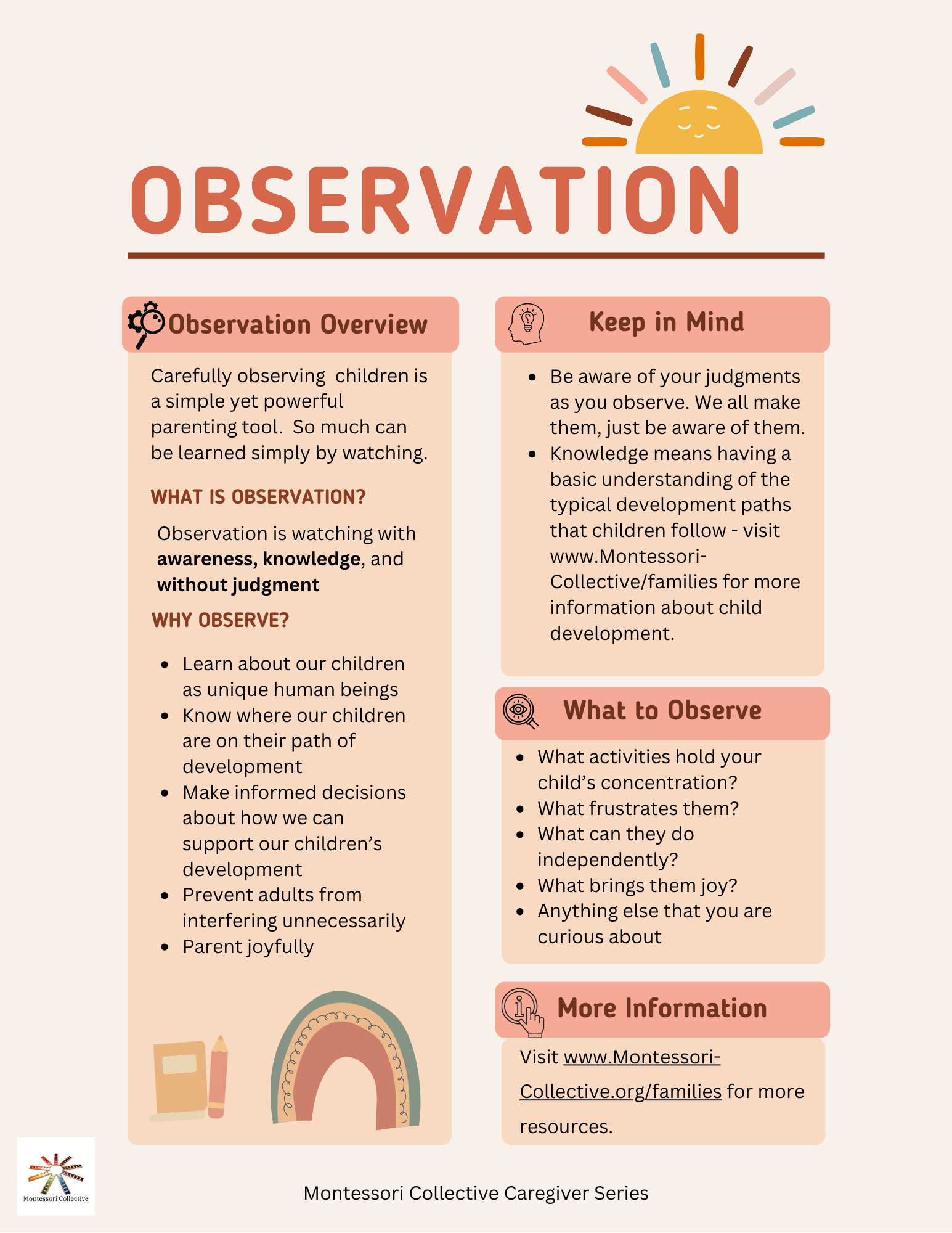
Download a handout that provides an overview of using observation as a powerful parenting tool.
Ages: All

Through her observations of children, Dr. Maria Montessori identified 4 stages of development. During each stage, children develop specific skills. By understanding the stages of development, adults can be better prepared to meet children's needs.
Ages: Birth-3 years
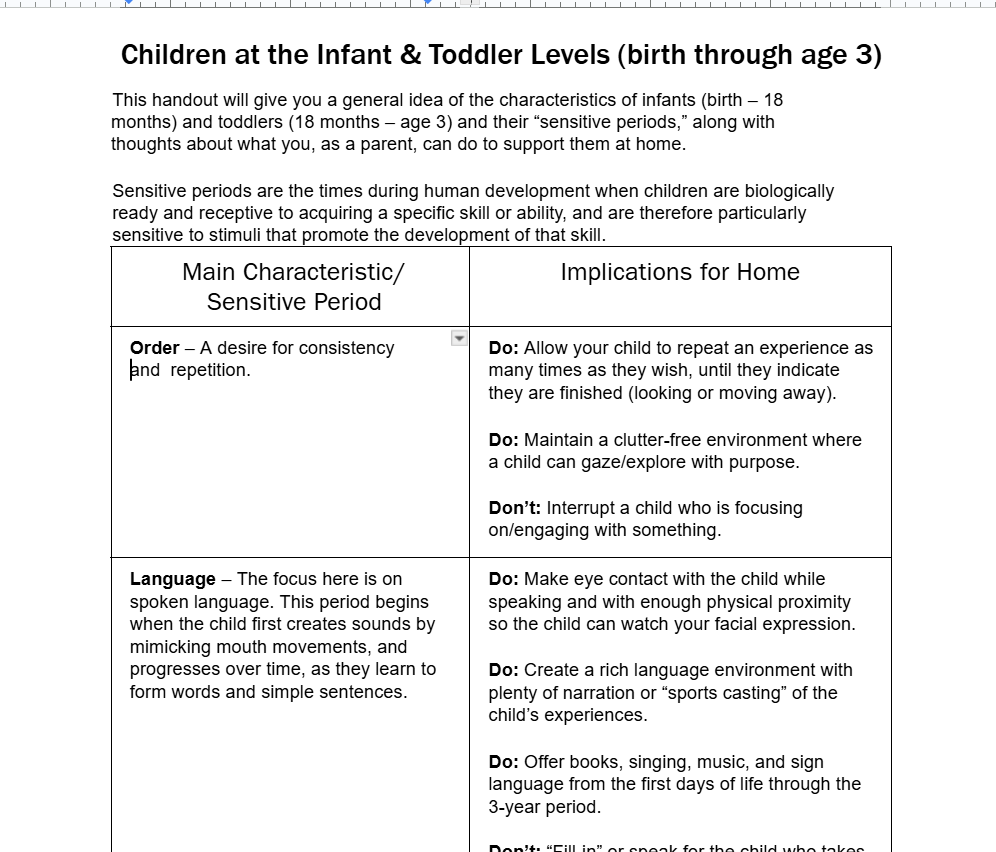
This handout from the American Montessori Society explains common characteristics of infants (birth – 18 months) and toddlers (18 months – age 3) and their “sensitive periods,” along with thoughts about what you, as a caregiver, can do to support them at home.
Ages: 2.5-6 years
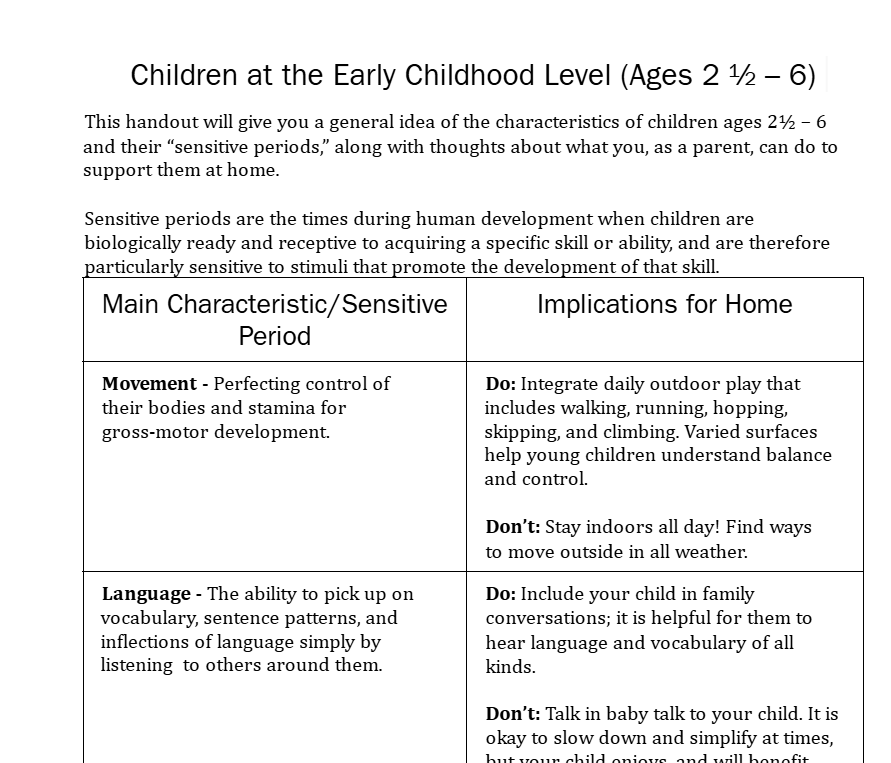
This handout from the American Montessori Society explains common characteristics of children ages 2½ – 6 and their “sensitive periods,” along with thoughts about what you, as a caregiver, can do to support them at home.
Ages: 6-12 years

This handout from the American Montessori Society explains common characteristics of children ages 6 – 12 and their “sensitive periods,” along with thoughts about what you, as a caregiver, can do to support them at home.
Ages: 12-18
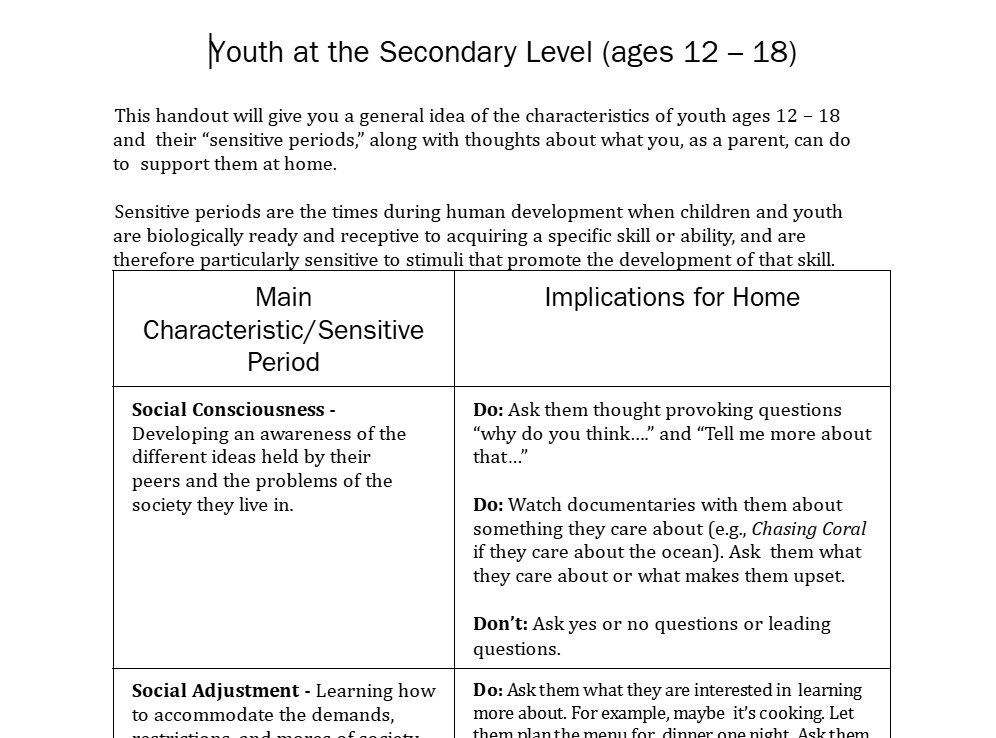
This handout from the American Montessori Society explains common characteristics of youth ages 12 – 18 and their “sensitive periods,” along with thoughts about what you, as a caregiver, can do to support them at home.
Ages: All
The Center on the Developing Child at Harvard University explains how children and adults build executive function and self-regulation skills.
Ages: 0-6
The Center on the Developing Child at Harvard University explains how children's brains develop.
Ages: 0-6
The Center on the Developing Child at Harvard University explains how interactions between adults and children build children's brains.
Ages: 0-6
The Center for the Developing Child at Harvard University explains the 5 steps for Serve and Return interactions.
Ages: All
This article from The Center on the Developing Child at Harvard University provides suggested activities to support children's executive functioning from six months old to adolescence.
Ages: 3-6 years
This video from Edutopia provides 4 ways to build executive functioning skills with preschool children.
Ages: 13-18
This article from the McLean School provides five ways that caregivers can support teens in developing executive functioning skills.
Ages: All
This article from The Center on the Developing Child at Harvard University explains how helping children develop strong executive functioning skills benefits individuals and society at large.
Ages: 0-6
Young children are driven to move. Learn how you can set up your home to help children meet this natural need.
Ages: 0-6
Children naturally want to be independent. Learn how to set up your home environment to foster independence.
Ages: 0-6
Learn how adult actions can help children grow their independence.
Ages: 0-3
First 17 minutes - Intended for teachers, but very relevant to families. Learn how adults can support children in growing their independence.
Ages: All
This video from the Simms/Mann Institute provides tips on building children's autonomy and executive functioning skills.
Ages: 0-6
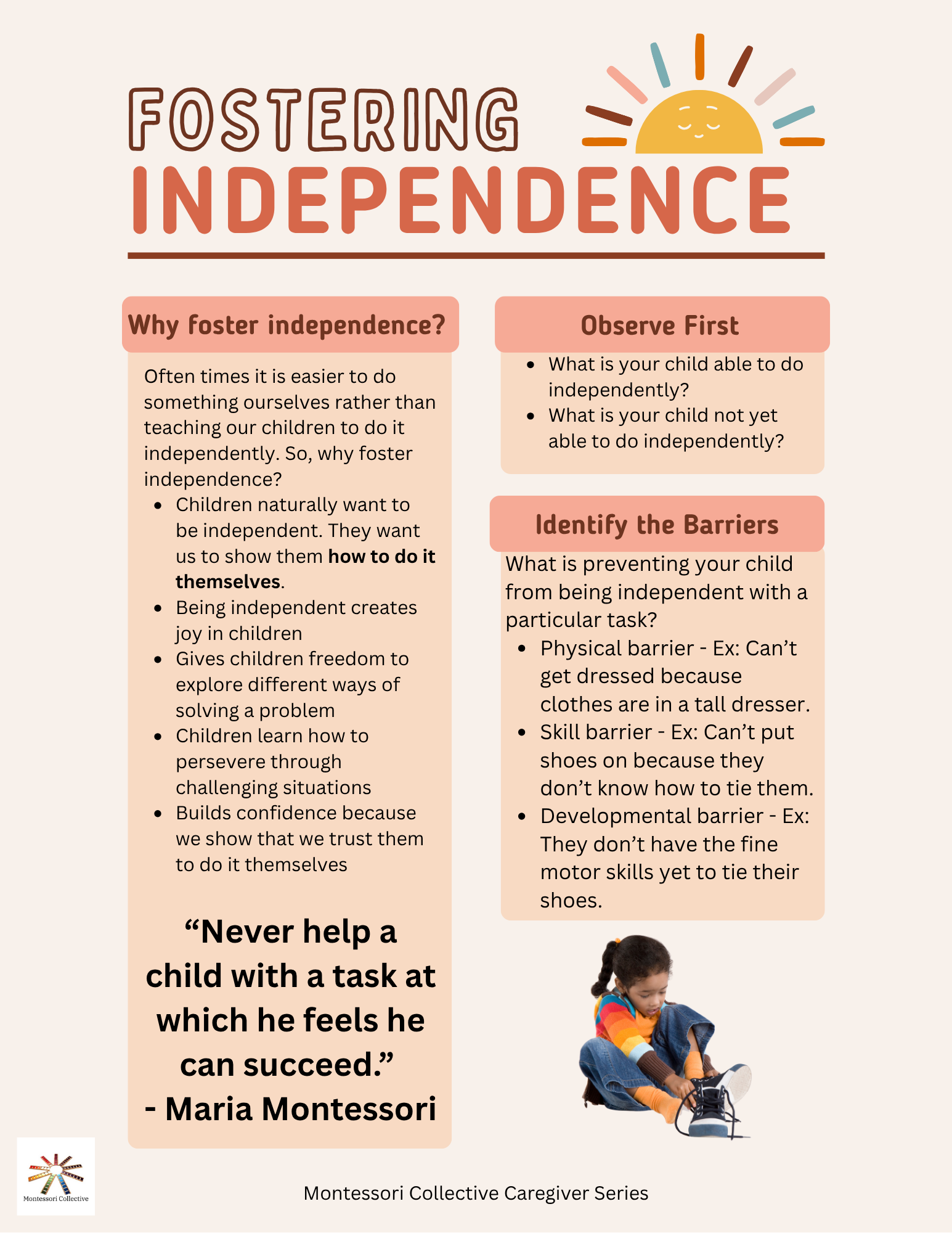
Download a handout that provides tips to foster children's independence.
Ages: 0-12 months
Social emotional development begins at birth. Learn ways that you can build a strong foundation for your baby's emotional growth.
Ages: 1-3 years
Learn how you can support your toddler in developing strong social emotional skills.
Ages: 6 months - 3 years
Tantrums and meltdowns are a normal part of early childhood, and some of them can be avoided if we understand children's need for routine and order.
Ages: 3-6 years
Learn about ways to support social emotional development for three to six year olds.
Ages: All
A list of books to help children explore emotions and learn social skills.
Ages: Birth - 5 years
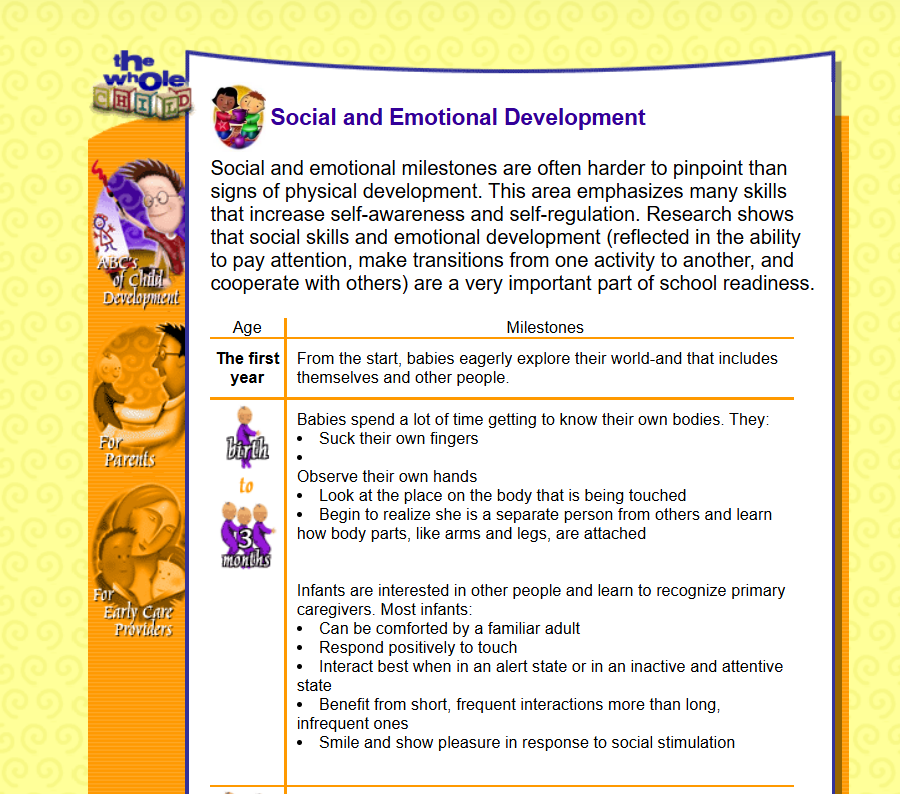
This website provides an overview of the stages of social and emotional development from birth through age 5.
Ages: All
This video is an overview of our approach to discipline in Montessori.
Ages: All
Setting clear limits for our children is a critical element of parenting. Watch this video for some tips and tricks. This is a follow up video to Discipline Overview, so we invite you to watch that one first.
Ages: 2-6 years
It is completely normal for children to exercise their will and desire power in their lives. Watch this video for tips on avoiding and navigating power struggles.
Ages: All
Over the past decade or so, the dominant culture in America has emphasized rewards and praise to promote desired behaviors in children. However, shaping children’s behavior through rewards can inhibit their internal locus of control. This does not mean that we never reward or praise our children, we just need to be intentional about it. Watch this video to learn about alternatives to rewards and praise.
Ages: 0-6
Understand the various stages of language development from birth to age 6.
Ages: 0-6
Learn about ways that we can foster children's language development from birth.
Ages: 18 months - 6 years
As children get older and develop their own will, many parents experience frustration when their children don’t do as they are asked. We often say about our children, “they just don’t listen.” Sometimes this is because we haven’t communicated in a way that helps them listen.
Ages: 18 months - 4 years
It is completely normal for young children to have meltdowns and tantrums, but we can avoid some of them by supporting children's language development.
Ages: 0-6
This guide from Maryville University outlines milestones for language development and signs that additional support may be necessary.
A child's success as a reader begins much earlier than the first day of school. Reading, and a love for reading, can begin long before children begin formal schooling. Below you will find a variety of resources to support literacy development at home. Although they're divided by age, many of them can be used with children at various ages and stages — we encourage you to choose the ones that work best for your child.
The sites titled "Reading with..." include downloadable PDFs in 12 languages.
Your kind gift empowers parents and caregivers of young children.