- Dec 3, 2024
Adapting Traditional Curricula to Align with Montessori
- Emily Madison
Many states across the country have required that public schools adopt approve literacy curricula aligned to the Science of Reading. Thanks to the tireless efforts of some state-level organizations, some states have added Montessori to the list of approved curricula.
However, in most states, public Montessori schools are required to implement a non-Montessori curriculum from the state-approved list. These traditional curricula are typically written for a single grade-level, and often utilize worksheets as a primary method of instruction, which do not align to Montessori pedagogy.
For the past two and a half years, Montessori Collective has been supporting the Montessori schools in Denver Public Schools in implementing the Amplify CKLA literacy curriculum. While this hasn't been easy, we've been able to implement the phonics content in the Amplify CKLA Skills strand through Montessori materials and practices. If your school is using Amplify CKLA, you can learn more about the resources Montessori Collective has developed here.
Are you trying to adapt other traditional curriculum to fit into Montessori environments? Here are some steps we found helpful in our work:
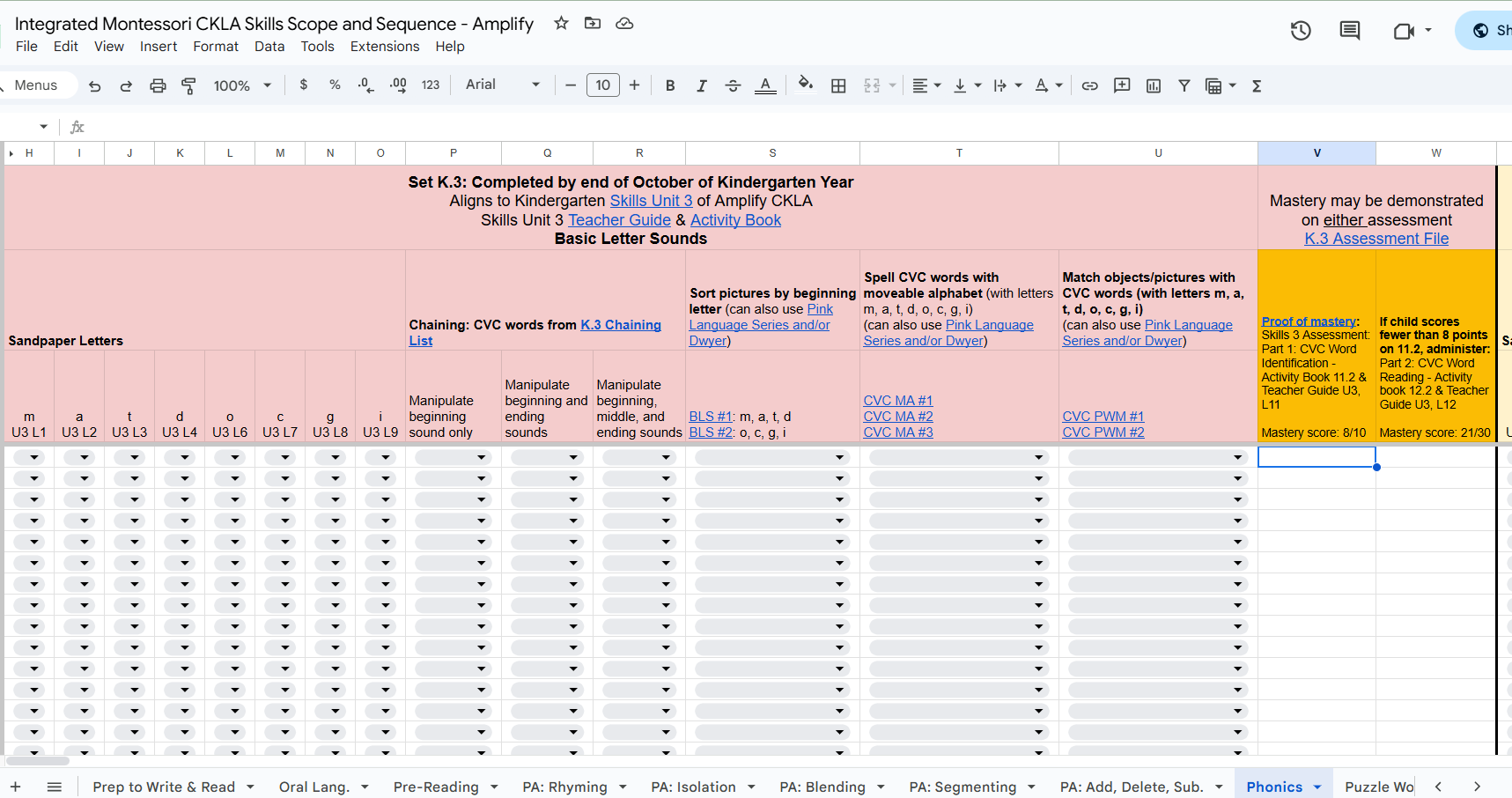
1) Map out the Scope and Sequence
Develop a deep understanding of the skills that are taught in the traditional curriculum. This can begin by looking at the curriculum's scope and sequence documents, but may also require deeper examination through unit and/or lesson overviews. It is important to be very specific about what skills are taught in the traditional curriculum to ensure that they are taught in our Montessori classrooms.
Using the traditional curriculum's scope and sequence, you can then create a continuum of skills across multiple grade levels. For early literacy, this would typically be for Kindergarten through 2nd or 3rd grade. Having a continuum that spans multiple grades allows children to progress through the skills at their own pace, in alignment with Montessori pedagogy.
See a sample of our scope and sequence mapping for Amplify CKLA.
2) Align the Skills with Montessori Materials
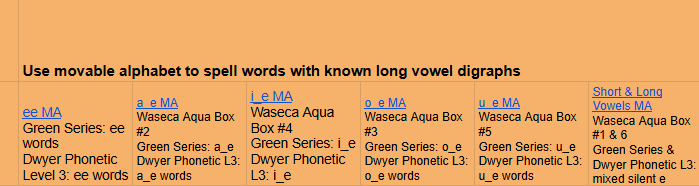
Now that you know what skills are taught in the traditional curriculum, you can align them to the Montessori materials that are already in your school. We found it helpful to document the specific materials that could be used to teach and practice each skill. See the sample of our Amplify CKLA scope and sequence map for examples.
Depending on the materials you have and the skills taught in the traditional curriculum, new materials or lessons may need to be created. Check out some of the materials that Montessori Collective has created.
3) Plan for Record Keeping
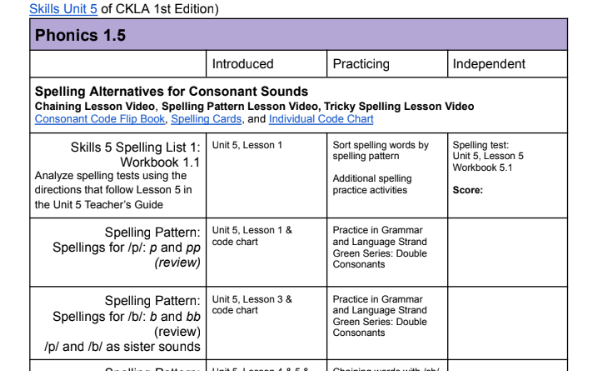
Record keeping is an integral part of Montessori pedagogy. Therefore, it is important to create a plan for documenting children's progress through this learning continuum. This could take a variety of forms, including a spreadsheet, a paper-based document, or adding custom lessons sets to your record keeping software.
4) Consider Milestones
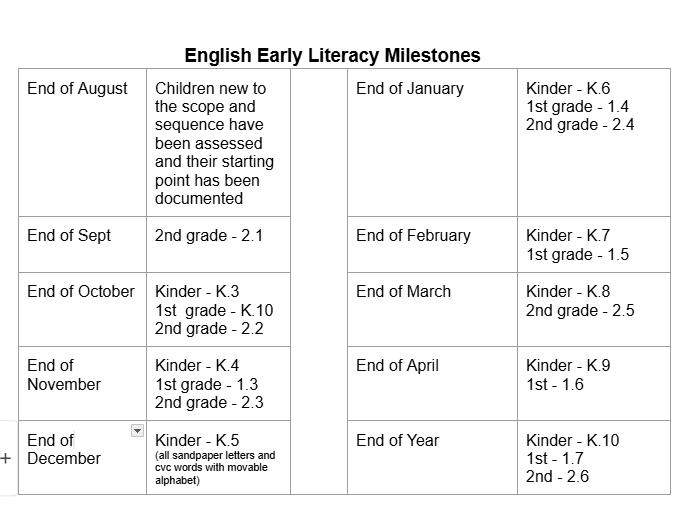
Our goal is to follow the children and guide them on their learning journeys, and each child's journey may look different.
But, how do we know when a child needs extra support? We chose to add "milestones" to our scope and sequence documents. If children are falling behind on these milestones, it is an indicator that they may need additional support through a Child Study/MTSS/RTI process.
For example, our milestone to know the sounds for all of the lower case sandpaper letters and spell CVC words with the movable alphabet is December of kindergarten. The majority of children in Montessori classrooms will acquire these skills well before the middle of their kindergarten year. For those who don't, the milestones help us understand when to seek additional support.
5) Consider Assessments
Using short assessments can help monitor student progress and ensure that children have mastered skills, just like the 3rd period of a lesson. Therefore, after we have observed that a child is independent with a set of skills, we use the aligned assessment from the curriculum to ensure mastery before moving to the next set of skills. These assessments are quick, and are given to children one on one or in a small group, just as a lesson would be given. Children don't even need to know that they are taking an assessment.
We also use these assessments to place new children in the scope and sequence so that we can provide appropriate instruction based on which skills they have already mastered.
If you are interested in learning more about Montessori Collective's work in adapting the Amplify CKLA curriculum to align with Montessori, check out our website where you can see samples of our work, download free Montessori language work, and register for our bimonthly office hours.